When you are preparing for your first job, some requirements feel familiar right away. A resume makes sense, a valid ID makes sense, then a company or government office asks for a Barangay Clearance, and the process suddenly feels less clear.
A Barangay Clearance is one of the most common local documents in the Philippines. Some employers may request it as part of pre-employment requirements, while other applicants encounter it when preparing related documents such as NBI Clearance, police clearance, or first-time jobseeker certifications. For fresh graduates and career shifters, knowing how to get one can help you avoid last-minute stress during hiring.
The important thing to remember is that Barangay Clearance is issued locally, meaning the basic idea is similar across the country, but the exact requirements, fees, processing time, and forms can vary depending on your barangay. This guide explains how to get a Barangay Clearance for job applications, what to prepare, and what first-time jobseekers should know before going to the barangay hall.
Quick Answer: How Do You Get a Barangay Clearance?
To get a Barangay Clearance, visit the barangay hall that covers your current residence, bring proof of identity and residency, fill out the required form, pay any applicable fee, and wait for the clearance to be processed and released.
A typical process looks like this:
- Go to your barangay hall.
- Ask for a Barangay Clearance for employment or job application purposes.
- Fill out the application form.
- Present your valid ID and proof of residence, if requested.
- Pay the fee, unless you qualify for a fee exemption.
- Wait for processing and release.
For first-time jobseekers, it is also important to ask whether you need a Barangay Certification under the First Time Jobseekers Assistance Act, especially if you plan to use it for free pre-employment documents such as NBI Clearance.
What Is a Barangay Clearance?
A Barangay Clearance is a document issued by your barangay that generally confirms that you are a resident of the area and may indicate that you have no negative record or pending complaint within the barangay’s jurisdiction.
For job applications, it is usually used as a supporting document and does not replace major government-issued IDs such as the National ID, passport, or driver’s license. Moreover, it also does not replace an NBI Clearance since it instead works as a local document that may help support employment, residency, or verification requirements.
Some employers ask for it because it is accessible and locally issued. Some government processes may also ask for a barangay-issued certification or clearance depending on the transaction.
Is Barangay Clearance Required for Job Applications?
Barangay Clearance is not always required for every job application in the Philippines. Some employers ask for it, while others do not. In many cases, companies focus first on your resume, interview results, valid ID, and role qualifications. Barangay Clearance may come later during pre-employment processing. The best way to think about it is this:
| Situation | Is Barangay Clearance Usually Needed? |
| Sending your first resume | Usually not required |
| Initial interview | Usually not required |
| Pre-employment checklist | Possible, depending on employer |
| Applying for NBI Clearance as a first-time jobseeker | Barangay certification may be needed |
| Local government or community-based requirement | Possible |
For fresh graduates, this means you do not need to delay applying for jobs just because you do not have a Barangay Clearance yet. Still, knowing how to get one can help you move faster if an employer eventually asks for it.
Barangay Clearance vs Barangay Certification: What’s the Difference?
People often use these terms loosely, but they are not always the same.
Barangay Clearance
A Barangay Clearance is commonly used to show that you are a resident in good standing within your barangay, which may be requested for employment, business, ID applications, or other local transactions.
Barangay Certification
A Barangay Certification is usually more specific as it certifies a particular fact, such as your residency, indigency, or first-time jobseeker status.
The distinction matters because the First Time Jobseekers Assistance Act specifically says first-time jobseekers availing of the law’s benefits must present a barangay certification stating that they are first-time jobseekers. The NBI first-time jobseeker process also refers to this requirement for applicants using the first-time jobseeker route.
If you are unsure which one your employer or agency needs, ask for the exact wording before requesting the document.
Why Fresh Graduates May Need a Barangay Clearance
Fresh graduates may encounter Barangay Clearance or Barangay Certification for several reasons.
It may appear in a pre-employment checklist
Some employers include Barangay Clearance as part of their onboarding requirements. This is more common in certain companies, local employers, or roles where verification documents are requested after a job offer.
It may support first-time jobseeker benefits
Under the First Time Jobseekers Assistance Act, eligible first-time jobseekers can avail of certain government documents without fees or charges, but they must present barangay certification proving first-time jobseeker status. The benefit may only be availed of once.
It may help with other document applications
Some government-related transactions may accept barangay-issued documents as supporting proof. For example, PhilSys lists barangay-issued documents among secondary supporting documents in certain National ID registration contexts through its supporting documents page.
It can help verify local residency
Barangay Clearance can support proof that you live within the barangay’s jurisdiction that may matter for local paperwork, nearby employment, or certain administrative requests.
Common Barangay Clearance Requirements
Because Barangay Clearance is issued locally, there is no single nationwide checklist that applies to every barangay. Requirements can vary depending on your location and the purpose of the clearance. Still, many barangays commonly ask for some combination of the following:
| Valid ID | To verify your identity |
| Proof of residence | To confirm you live in the barangay |
| Cedula or Community Tax Certificate | Sometimes requested by local offices |
| Application form | To record your request and purpose |
| Recent photo | Required by some barangays |
| Payment or official receipt | If a fee applies |
| Barangay certification request details | If applying as a first-time jobseeker |
Before going, check your barangay’s official page, posted Citizen’s Charter, or contact number if available. Under RA 11032, government offices are expected to provide service standards through a Citizen’s Charter, which should help clients understand requirements, steps, fees, and processing time for services.
How to Get a Barangay Clearance for Job Applications
Here is the practical step-by-step process.
Step 1: Go to the barangay hall where you live
You normally need to apply at the barangay that covers your current residence. A neighboring barangay generally cannot issue a clearance for you if you do not live within its jurisdiction.
Before going, check the barangay hall’s office hours. Some barangays process documents only during specific hours, while others may have cut-off times for same-day release.
Step 2: Ask for the correct document
Tell the staff what you need the document for; say that you are requesting a Barangay Clearance for employment or job application purposes.
If you are a first-time jobseeker, also ask whether you need a Barangay Certification for first-time jobseeker benefits under Republic Act No. 11261, especially if you plan to use the certification for free documents such as the NBI Clearance.
Step 3: Fill out the application form
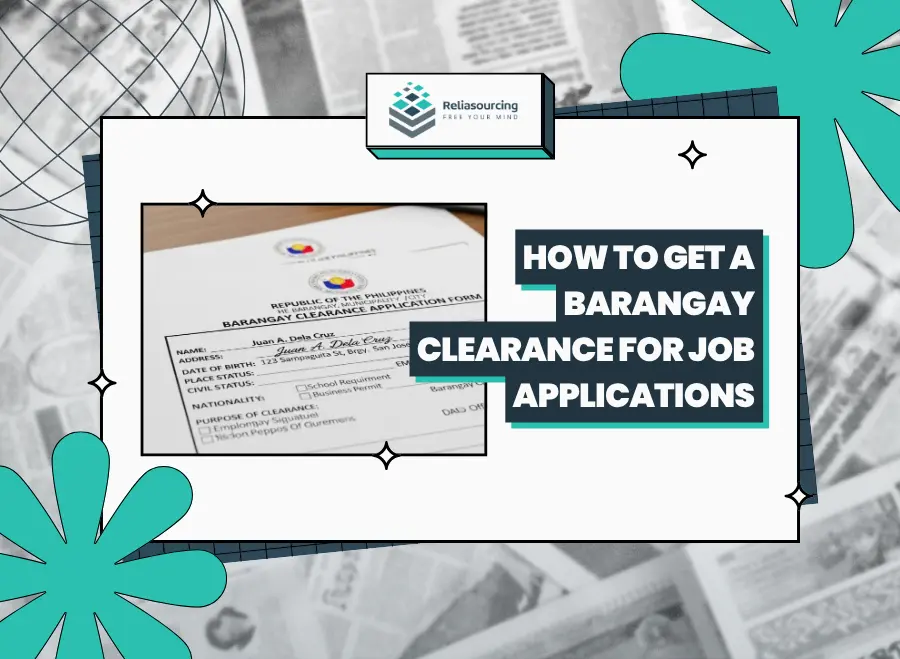
Most barangays will ask you to complete a request form. The form may ask for:
- Full name
- Address
- Birthdate
- Civil status
- Purpose of request
- Length of residency
- Contact information
Write your details clearly and make sure your name matches your valid ID and other documents.
Step 4: Present your valid ID and supporting documents
Bring at least one valid ID, and prepare proof of residence if your ID does not show your current barangay address. Some barangays may ask for a cedula, photo, or other local requirements.
If you are applying for a first-time jobseeker certification, bring any documents the barangay requires to confirm your status.
Step 5: Pay the fee, if applicable
Barangay Clearance fees vary by barangay and purpose. Some employment-related clearances may have a small fee. First-time jobseekers who qualify under RA 11261 may be eligible for fee-free covered documents, but you need to follow the proof and eligibility requirements under the law. Take note: always ask for an official receipt if you pay a fee.
Step 6: Wait for processing and release
In many cases, Barangay Clearance can be released within the same day. Processing time still depends on your barangay, queue length, document completeness, and whether the authorized signatory is available.
Before leaving, check the document carefully. Make sure your name, address, purpose, date, and other personal details are correct.
What First-Time Jobseekers Should Know
First-time jobseekers should pay close attention to the difference between a general Barangay Clearance and the special barangay certification used under RA 11261.
The First Time Jobseekers Assistance Act allows eligible first-time jobseekers to obtain certain government documents for employment without fees or charges. The law states that first-time jobseekers availing of the benefits must present a barangay certification confirming their first-time status.
The law also states that this benefit can only be availed of once, meaning it is better to plan the timing carefully. If you intend to get NBI Clearance, police clearance, or other covered documents, ask your barangay how their first-time jobseeker certification process works before requesting documents one by one.
Can Barangay Clearance Be Used for NBI Clearance?
For general NBI Clearance applications, the NBI asks for valid identification documents. For first-time jobseekers using the special route, the NBI first-time jobseeker process refers to the first-time jobseeker lane and documentary requirements connected to RA 11261.
A key point: do not assume that a regular Barangay Clearance and a first-time jobseeker Barangay Certification are automatically interchangeable. If you are applying for NBI Clearance under the first-time jobseeker benefit, ask for the barangay document specifically required for that purpose.
How Long Does It Take to Get a Barangay Clearance?
Barangay Clearance is often processed on the same day, but that is not guaranteed everywhere. Processing time depends on the barangay’s system, queue, staffing, and whether the document needs approval or signature from authorized officials.
A good rule is to avoid getting it on the same day your employer needs it. Give yourself at least a few days of allowance, especially if you are also preparing other requirements.
How Much Does Barangay Clearance Cost?
The fee can vary depending on the barangay and the purpose of the document. Some barangays charge a small fee for personal or employment-related clearances, while others may waive fees in certain cases.
For first-time jobseekers, check whether your request falls under the benefits of RA 11261. The law covers certain government documents required for employment, but you need to present the required proof of eligibility and can only avail of the benefit once.
What If Your Barangay Has an Online System?
Some barangays or LGUs may offer online requests, appointment systems, or digital forms. Others still process everything in person.
If your barangay has an official website, Facebook page, hotline, or city services portal, check it before going. Online information can help you confirm requirements, fees, processing time, and office hours.
Still, be careful with unofficial pages. For document requirements, rely on your barangay, city or municipal government, or posted Citizen’s Charter whenever possible.
Common Mistakes to Avoid
Asking for the wrong document
If your employer asks for Barangay Clearance, request that. If you need first-time jobseeker proof, ask for Barangay Certification for first-time jobseeker purposes. The wording matters.
Going to the wrong barangay
Apply where you live. Your barangay clearance or certification should come from the barangay that has jurisdiction over your residence.
Bringing no proof of residency
If your valid ID does not show your current address, bring another document that can help support residency, such as a utility bill, lease document, or other proof your barangay accepts.
Waiting until the deadline
Barangay Clearance can be fast, but delays still happen. Do not wait until your employer’s deadline before requesting it.
Assuming requirements are the same everywhere
Barangay processes vary. Always check local requirements before going.
Quick Checklist Before You Go
Use this checklist before visiting your barangay hall:
- Confirm which document you need: Barangay Clearance or Barangay Certification
- Bring at least one valid ID
- Prepare proof of residence if needed
- Bring cedula if your barangay requires it
- Prepare a small amount for fees, if applicable
- Ask about first-time jobseeker benefits if you qualify
- Check your document carefully before leaving
How Barangay Clearance Fits Into Your Job Requirements
Barangay Clearance is only one part of a larger job-readiness checklist. Depending on the employer, you may also need:
- Updated resume or CV
- Valid ID
- School records
- NBI Clearance
- TIN registration details
- PhilHealth details
- SSS and Pag-IBIG information
- Medical requirements
- Company-specific onboarding forms
For fresh graduates, the best approach is to first prepare the basics, then complete additional documents as they become relevant. You do not need to have every document before sending applications, but you should understand how to get each one when needed.
For a wider overview, you can also read our guide on job requirements for fresh graduates in the Philippines.
FAQs About Barangay Clearance for Job Applications
How do I get a Barangay Clearance for job applications?
To get a Barangay Clearance for job applications, visit your barangay hall, request a clearance for employment purposes, present your valid ID and other required documents, fill out the form, pay any applicable fee, and wait for release. Requirements vary by barangay, so check locally before going.
Is Barangay Clearance required for employment?
Barangay Clearance is not required for every job in the Philippines. Some employers include it in their pre-employment checklist, while others do not. If a company asks for it, clarify whether they need a Barangay Clearance, Barangay Certificate, or first-time jobseeker certification.
What is the difference between Barangay Clearance and Barangay Certification?
Barangay Clearance usually confirms that you are a resident in good standing within the barangay. Barangay Certification confirms a specific fact, such as residency, indigency, or first-time jobseeker status. For RA 11261 benefits, the law specifically refers to barangay certification proving first-time jobseeker status.
Can first-time jobseekers get Barangay Clearance for free?
Eligible first-time jobseekers may qualify for fee-free covered employment documents under the First Time Jobseekers Assistance Act. Ask your barangay how they process first-time jobseeker certification and whether your request qualifies.
Can I get Barangay Clearance from a barangay where I do not live?
You generally need to request Barangay Clearance from the barangay that covers your residence. Since the document is locally issued, the barangay needs to verify that you live within its jurisdiction.
How long is Barangay Clearance valid?
Validity can depend on the purpose and the requesting institution. Some employers may ask for a recently issued clearance. If your employer or agency has a specific validity requirement, follow that instruction.
Final Thoughts
Getting a Barangay Clearance for job applications is usually a straightforward local transaction, but it becomes confusing when applicants are not sure which document they need. The safest move is to ask for the exact document required, prepare proof of identity and residence, and confirm your barangay’s latest process before going.
For first-time jobseekers, the document becomes even more important because a barangay certification may help you access fee-free employment documents under RA 11261, which can make your first set of job requirements more manageable if you plan carefully.
You do not need to complete every employment document before applying for jobs. Start with the basics, understand what comes next, and prepare each requirement with enough time to avoid last-minute pressure.
Ready to put your documents to use? Explore open roles at Reliasourcing and take the next step in your career. If you’re looking for a company that guides you from the start of your job application to landing a job, visit our Careers Page. Check our open roles and see if you’re a great fit for #LifeAtReliasourcing.
About Reliasourcing
Reliasourcing is a premier outsourcing solutions provider in the Philippines. We deliver tailored services that help businesses across industries achieve operational efficiency and scalability. With a focus on customer experience and innovation, Reliasourcing remains a trusted partner in unlocking potential through outsourcing.
Follow us on Facebook, Instagram, LinkedIn, YouTube, and X for the latest trends and insights on outsourcing, the industry, and the Philippines.
Connect with us, or become part of our growing team today!