
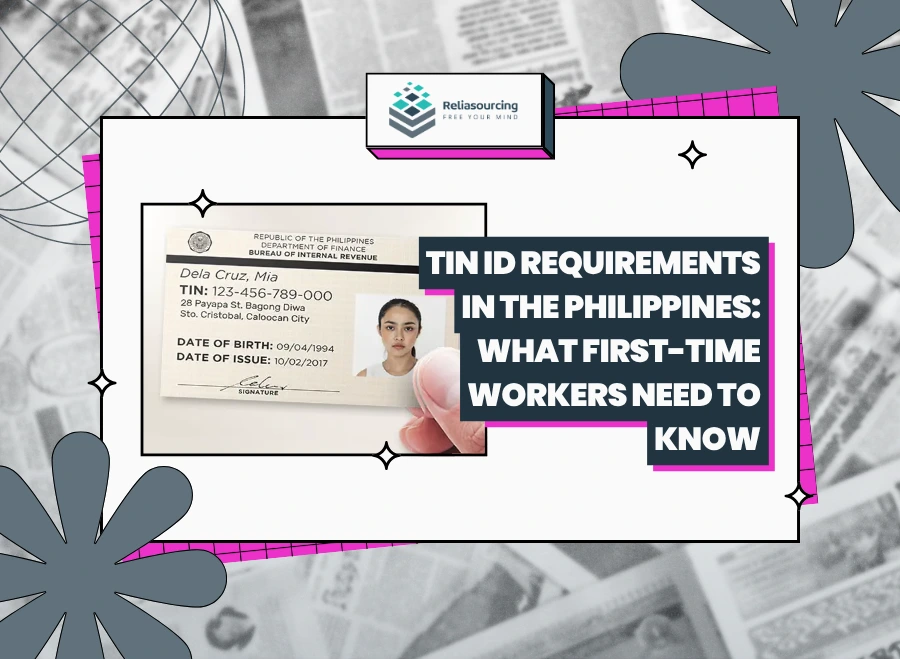
For many first-time workers, the phrase “TIN ID” shows up before the process itself makes sense. A recruiter may ask whether you already have a TIN. A checklist might mention a TIN ID. Friends may say you need one before you get hired. Then you go online and find a mix of older advice, partial explanations, and confusing instructions.
The first thing worth clearing up is simple: for employment, the bigger priority is usually getting your TIN properly registered, not just chasing a physical card. The Bureau of Internal Revenue’s official registration guidance centers on primary registration, taxpayer records, and digital services such as ORUS, while BIR circulars also confirm that both the Digital TIN ID and the updated physical TIN card exist within the current system.
This guide will walk you through what a TIN is, what people usually mean when they say “TIN ID,” what requirements to prepare, and how to think about the process if you are entering the workforce for the first time.
Quick Answer: What Do First-Time Workers Actually Need?
At a glance, here are the primary things you need to know about the TIN ID:
- You need a TIN for tax and employment-related transactions.
- The BIR now uses ORUS, its Online Registration and Update System, for end-to-end registration and registration updates.
- A Digital TIN ID is officially available and accepted, and as of April 24, 2026 it is also available through the eGovPH mobile app.
- A physical TIN card still exists, but older TIN cards remain valid and do not expire, while new physical cards use BIR Form No. 1931.
Hence, if you’re a first-time worker, your first questions should revolve less around the idea of the how-tos of getting a card and more around whether you already have a TIN in the first place.
What Is a TIN?
A TIN, or Taxpayer Identification Number, is the number the BIR uses to identify taxpayers in its records, used for tax administration, payroll-related records, and other transactions that require tax registration. The BIR’s primary registration page is the official starting point for this process.
For first-time workers, this usually becomes important once you are being hired formally or asked to complete payroll and employee records, which is why the TIN comes up so often in pre-employment checklists even if you have never dealt with the BIR before.
What Is the Difference Between a TIN and a TIN ID?
This is where most of the confusion begins for most fresh graduates and first-time job hunters. Simply, a TIN is your taxpayer number, while a TIN ID is the card or digital identification linked to that taxpayer record.
The BIR has clarified that the old yellow-orange TIN cards are still valid and do not expire, that they are no longer issued, and that they have been replaced by a new green TIN card design under BIR Form No. 1931. The BIR also announced in 2023 that the Digital TIN ID is available and accepted through ORUS, and in 2026 it further announced that the Digital TIN ID became available through the DICT eGovPH Mobile App starting April 24, 2026.
That means the modern answer is not “card only” or “digital only.” The better answer is that the BIR now supports both physical and digital forms, but the underlying requirement is still proper taxpayer registration.
Why Employers Ask for a TIN
Employers usually ask for your TIN because tax-related records are part of formal employment. Once you are hired, your compensation and withholding-related records need to connect to a proper taxpayer record, which is why a TIN appears during hiring and onboarding, even if it is not always required before your very first application.
In practice, many first-time workers do not need to finish everything before sending resumes. Still, once a company starts preparing your employment records, the TIN moves from “nice to know” to “important to complete.”
Do First-Time Workers Need a TIN Before Applying for Jobs?
Not always. For many entry-level roles, you can start applying even if you are still preparing your TIN-related documents. The more realistic timeline is that the TIN becomes important during the offer stage or onboarding stage, when an employer starts organizing payroll and tax-related records. The BIR’s registration system is clearly built around formal taxpayer registration rather than casual pre-application use. Hence, it’s helpful to separate the process into two stages:
Before applying
- Resume or CV
- At least one valid ID
- School records if needed
Closer to hiring
- TIN registration or TIN confirmation
- PhilHealth and other statutory records
- Other company-specific onboarding forms
TIN ID Requirements in the Philippines: What to Prepare
The exact documentary requirements can vary depending on what you are doing. You may be:
- Applying for a TIN for the first time;
- Verifying whether you already have one;
- Requesting a physical TIN card; or
- Accessing a Digital TIN ID.
1) If you are registering for a TIN for the first time
The BIR’s ORUS platform is the official web-based system that provides an end-to-end process for registration and updates to registration information. ORUS guidance explains that taxpayers who do not yet have an existing TIN or BIR record can create an account using a permanent or company email address.
What to prepare
- A valid email address for your ORUS account.
- The personal information needed to complete registration accurately.
- Any supporting documents required for your taxpayer category, as indicated in the BIR registration flow.
First-time worker tip: use your own stable email address if possible, not just one you might lose access to later. ORUS ties registration to the enrolled email account.
2) If you need to confirm whether you already have a TIN
Before applying again, check first. The BIR provides eTINQuery, which shows basic taxpayer information including name, address, birthdate, TIN, and RDO code. The BIR also has a separate TIN Validation page.
A taxpayer should not end up with multiple TINs. For first-time workers who are unsure whether a school transaction, bank-related process, or previous registration already created a record, checking first is the smarter move. The BIR’s systems for TIN query and validation exist precisely because confirming your record matters.
3) If you need a physical TIN card
The BIR’s updated Form 1905 guidance includes documentary requirements for TIN card issuance. For a first-time application of a paper TIN card, the cited requirements include:
- Latest 1×1 photo
- Any government-issued ID that shows the applicant’s name, address, and birthdate
- If the ID has no address, proof of residence or business address
The same guidance states that first-time application of a TIN card (Paper Card) is free of charge, while replacement due to loss or damage carries a P100.00 replacement fee, and personal appearance is mandatory.
First-time worker tip: this is one of the clearest examples of why “TIN registration” and “TIN card issuance” should not be treated as the same step.
4) If you want the Digital TIN ID
The BIR announced in RMC No. 120-2023 that the Digital TIN ID is available, valid, and accepted as an additional ORUS feature. Then in RMC No. 34-2026, the BIR announced that the BIR Digital TIN ID became available through the eGovPH Mobile App starting April 24, 2026.
If your registration is properly set up, digital access is now part of the modern BIR ecosystem, making the process more practical for workers who want something official without waiting for a physical card.
How to Get a TIN as a First-Time Worker
Here is the most useful way to think about the process.
Step 1: Check if you already have a TIN
Use the BIR’s official tools first if you are unsure. eTINQuery and TIN Validation are both designed to help verify taxpayer information.
Step 2: If you do not have one, start through ORUS
The BIR’s Online Registration and Update System (ORUS) is the official platform for end-to-end registration and registration updates. Create your account carefully and enter your information accurately.
Step 3: Follow the registration path that applies to your taxpayer category
The BIR’s registration structure is category-based, which is why requirements are not always identical for every applicant. The official registration page and ORUS flow are the best starting points because they reflect the current BIR process.
Step 4: Decide whether you also need a physical or digital TIN ID
Once your TIN registration is in order, the next question is format. Some workers may be fine with the Digital TIN ID, while others may also want the physical paper card depending on employer requests or personal preference. Both now exist in the official BIR system.
What About Manual Registration?
BIR guidance in RMC No. 4-2026 says that manual registration may be accepted only in exceptional cases, such as system downtime or technical errors that prevent online registration through ORUS. In those cases, taxpayers may be allowed to submit manual registration at the relevant RDO, but only upon compliance with stated conditions, meaning the default assumption for most first-time workers should now be online first, not manual first.
Common Mistakes to Avoid
A few issues cause unnecessary trouble for first-time workers:
- Applying again without checking if you already have a TIN. Use eTINQuery or TIN Validation first if there is any uncertainty.
- Focusing on the card before registration. The real foundation is proper registration, not the card by itself.
- Using outdated advice about old TIN cards. The BIR has already clarified that old cards remain valid, are no longer issued, and have been replaced by a new physical design.
- Assuming manual filing is the normal route. The current BIR system points taxpayers to ORUS first, with manual filing limited to exceptional cases.
Best Time to Work on Your TIN
If you are actively applying, the best time is usually when interviews are progressing or when an employer begins discussing formal requirements, since the timing gives you enough room to complete registration without turning it into a barrier before your search even starts. The structure of BIR registration itself suggests this is part of formal taxpayer setup, not a casual first-click requirement for every applicant.
Quick Reference: TIN vs TIN ID
| Item | What it means | Why it matters |
| TIN | Your taxpayer identification number | Needed for tax and employment records |
| Physical TIN card | Paper card linked to your taxpayer record | Useful if a physical ID is requested |
| Digital TIN ID | Official digital version recognized by BIR | Practical for digital access and verification |
The important thing is not to confuse the three. The number comes first. The ID formats follow.
FAQs About TIN ID Requirements in the Philippines
Do first-time workers need a TIN before applying for a job?
Not always. First-time workers don’t always need a TIN before applying for a job since many workers only need to complete TIN-related requirements once hiring moves into the offer or onboarding stage.
Is a TIN the same as a TIN ID?
No. The TIN is not the same as a TIN ID since the former is your taxpayer number, while the latter is the physical or digital identification linked to that record.
What are the requirements for a physical TIN card?
The requirements for a physical TIN card, according to the BIR Form 1905 guidance, list items such as a latest 1×1 photo, a government-issued ID showing name, address, and birthdate, and proof of address if the ID does not show it. It also notes that first-time paper-card application is free and personal appearance is mandatory.
Is the Digital TIN ID official?
Yes. The Digital TIN ID is official, as the BIR announced the Digital TIN ID in 2023 and further announced in 2026 that it is available through the eGovPH mobile app.
Can I register manually instead of using ORUS?
Yes, you can register manually instead of using ORUS. However, the BIR expects online registration through ORUS first before heading onto manual processing. Manual registration is reserved for exceptional cases such as system downtime or technical errors.
Final Thoughts
For first-time workers, the smartest way to approach the topic is to stop treating TIN ID as a standalone card chase. What matters first is whether you already have a taxpayer record, whether your registration is correct, and which BIR route applies to your situation. Once that part is clear, the physical card or Digital TIN ID becomes much easier to understand.
Ready to move from document prep to actual job opportunities? Explore open roles at Reliasourcing and take the next step in your career. If you’re looking for a company that guides you from the start of your job application to landing a job, visit our Careers Page. Check our open roles and see if you’re a great fit for #LifeAtReliasourcing.
About Reliasourcing
Reliasourcing is a premier outsourcing solutions provider in the Philippines. We deliver tailored services that help businesses across industries achieve operational efficiency and scalability. With a focus on customer experience and innovation, Reliasourcing remains a trusted partner in unlocking potential through outsourcing.
Follow us on Facebook, Instagram, LinkedIn, YouTube, and X for the latest trends and insights on outsourcing, the industry, and the Philippines.
Connect with us, or become part of our growing team today!