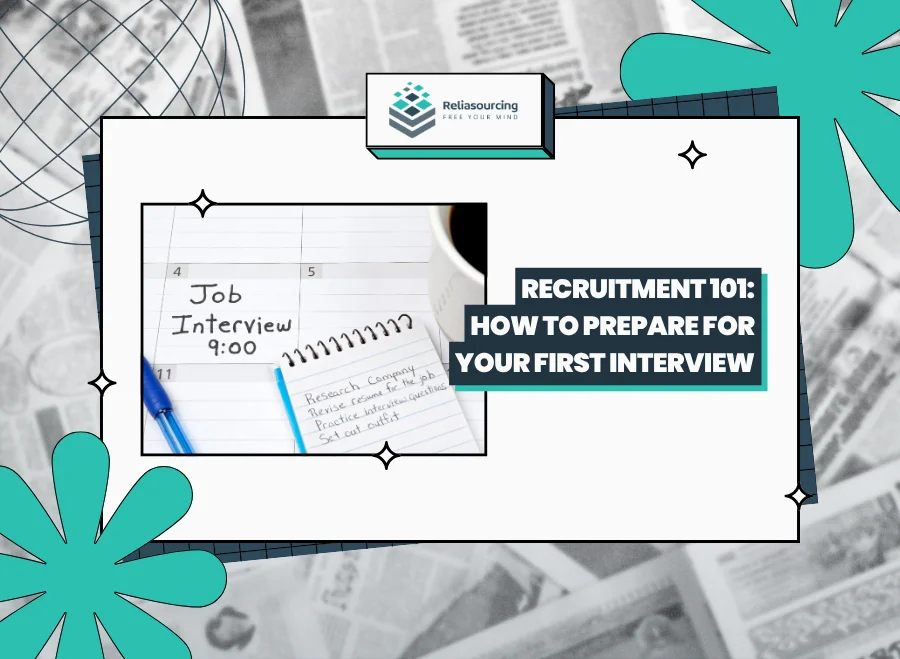
Getting invited to your first job interview can feel exciting and intimidating at the same time. You have already made it past the initial application stage, but now you have to sit down with a recruiter or hiring manager and explain why you might be the right person for the job.
For first-time applicants in the Philippines, that pressure can feel even heavier when you do not have much formal work experience to talk about. You may wonder what questions will come up, what you should wear, how early you should arrive, or whether you are expected to have polished answers ready for everything.
The good news is that interview preparation is a skill where you don’t need years of experience to have a good interview. You need to understand the role, know your own background, prepare relevant examples, and communicate clearly. If this is your first interview, here is how to get ready.
What Is a Job Interview Really For?
A job interview is more than a recruiter checking whether the information on your resume is accurate, as it gives the employer a chance to understand how your skills, experience, personality, and goals align with the position. At the same time, the interview is also your opportunity to assess the employer.
The Harvard Mignone Center for Career Success describes interviews as a chance for employers to assess qualifications, organizational fit, communication, professionalism, and an applicant’s reasons for pursuing the opportunity. Applicants, meanwhile, can use the conversation to determine whether the organization and role match their own interests and goals.
Think of it less as an interrogation and more as a professional conversation where both sides are trying to answer the same basic question: Is this a good match? That mindset can make your first interview feel considerably less intimidating.
1. Go Back to the Job Description
Before researching interview questions, start with the document that tells you what the company is actually looking for: the job posting. Read it again carefully and pay attention to:
- Core responsibilities
- Required and preferred qualifications
- Technical skills
- Communication requirements
- Work arrangement
- Schedule
- Software or tools mentioned
- Previous experience requirements
Then compare those requirements with your own background. You don’t need to match every item perfectly, especially for an entry-level role. Instead, identify where your experiences demonstrate similar abilities.
Perhaps you have never worked in customer service professionally, but you spent two years handling inquiries for a student organization. Maybe you do not have formal project management experience, but you coordinated a thesis group with multiple deadlines. Your goal is to identify the connection between what they need and what you have already done.
2. Research the Company Before the Interview
One of the most common questions in an interview sounds simple: “Why do you want to work here?” The question becomes much harder when you know almost nothing about the company. Before your interview, spend some time reviewing the organization’s:
- Website
- Products or services
- Industry
- Careers page
- Company culture
- Recent news or announcements
- Social media presence
You are not expected to memorize the company’s history. You should, however, understand enough to explain why the opportunity caught your attention.
The Philippine Department of Labor and Employment’s Employment Readiness Guide similarly recommends researching the company beforehand, noting that familiarity with the organization can help applicants answer questions more appropriately and demonstrate genuine interest.
Research also protects you as an applicant. Interviews are opportunities to determine whether the job, workplace, schedule, and expectations make sense for you.
3. Know Your Resume Well
Your interviewer may have your resume in front of them, but that does not mean you should rely on the document to explain your experience for you. Review everything you submitted before the interview, and you should be comfortable discussing:
- Your education
- Internships
- Previous jobs
- Volunteer experience
- School organizations
- Projects
- Certifications
- Skills
- Career gaps, if applicable
If something appears on your resume, assume the interviewer may ask about it. For first-time jobseekers, school and extracurricular experiences can be especially useful. A class presentation can demonstrate communication skills; a group project can provide an example of teamwork; managing an organization event can show planning and problem-solving.
If your resume still needs work, our guide on how to make an effective resume for fresh graduates can help you strengthen it before sending your next application.
4. Prepare for “Tell Me About Yourself”
For many applicants, this is the question that causes the most uncertainty. “Tell me about yourself.” Your interviewer is not asking for your entire life story. They generally want a concise introduction that establishes your background and connects it to the role. A simple structure works well:
Present → Experience → Interest
For example:
“I recently graduated with a degree in Business Administration, where I became particularly interested in sales and customer relations. During college, I worked on several group projects and joined our student organization, where I helped coordinate events and communicate with sponsors. I am now looking for an entry-level role where I can develop those communication and relationship-building skills in a professional environment.”
Keep it conversational. You are introducing yourself, not reciting a speech. Practice your answer enough that you know the main points, but avoid memorizing every word. A heavily rehearsed response can sound unnatural once the actual conversation begins.
5. Practice Common Interview Questions
You cannot predict every question, but many first interviews cover similar themes. Expect questions about your motivation, experience, strengths, challenges, availability, and understanding of the position. You may hear:
- Why did you apply for this role?
- Why do you want to work for this company?
- What are your strengths?
- What is one area you are working to improve?
- Why should we hire you?
- Where do you see yourself in the next few years?
- How do you handle pressure?
- Tell me about a time you worked with a team.
- Tell me about a problem you had to solve.
- Are you willing to work onsite or on shifting schedules?
Practicing does not mean writing perfect answers and memorizing them. UC Berkeley’s Career Engagement office recommends actual interview practice rather than simply thinking through answers in your head. Speaking aloud helps you notice when an explanation is too long, unclear, or difficult to deliver naturally. Try practicing with a friend, family member, classmate, or even in front of your phone camera.
6. Use Real Examples, Even If They Did Not Happen at Work
One concern first-time applicants often have is: “What if I do not have any work experience?” You still have experiences. Interviewers may ask behavioral questions beginning with phrases such as:
- “Tell me about a time when…”
- “Give me an example of…”
- “Describe a situation where…”
Your answers can come from school, internships, volunteer work, extracurricular activities, freelance projects, or other situations where you demonstrated relevant skills. A useful framework is STAR:
| Part | What to explain |
| Situation | What was happening? |
| Task | What were you responsible for? |
| Action | What did you personally do? |
| Result | What happened because of your actions? |
Suppose you are asked about handling conflict. Instead of saying “I am good at resolving conflicts,” you could explain how two members of your thesis group disagreed about responsibilities, what you did to organize the workload, and how the group eventually completed the project on time. Specific stories are usually much more convincing than simply describing yourself with positive adjectives.
7. Be Honest When You Do Not Know Something
A first interview does not require you to know everything. You might be asked about software you have never used, a situation you have never encountered, or a technical concept you cannot fully answer. Do not invent experience. Saying something such as “I have not worked with that platform yet, but I have used similar tools and would be willing to learn it” is far better than pretending you have experience that could easily be questioned later.
DOLE’s employment readiness guidance also advises applicants to give truthful accounts of their experience and background during interviews. Employers hiring entry-level workers usually understand that training will be necessary. Your willingness and ability to learn can be valuable when direct experience is limited.
8. Prepare for Questions About Salary and Availability
Your first interview may include practical questions earlier than expected. For example: “What are your salary expectations?” Before answering, research the typical compensation for similar entry-level roles, taking the location, industry, schedule, and responsibilities into consideration. You may also be asked:
- When can you start?
- Are you currently applying elsewhere?
- Are you comfortable working night shifts?
- Can you work weekends or holidays?
- Are you comfortable working onsite?
- Do you have any upcoming commitments that could affect your schedule?
Answer honestly. Agreeing to a schedule you cannot realistically maintain simply to move forward in the hiring process can create problems later.
9. Prepare Your Interview Setup
How you prepare will depend on whether your interview is onsite or virtual.
For an onsite interview
Confirm the exact address and plan your route ahead of time. In Metro Manila and other areas where travel times can change quickly, give yourself enough allowance for traffic, queues, weather, and unfamiliar routes. Aim to arrive around 10 to 15 minutes early and bring:
- Copies of your resume
- A valid ID
- A pen
- A small notebook
- Any documents specifically requested by the recruiter
If you are still organizing your pre-employment documents, our guide to valid IDs for fresh graduates and job applicants explains which documents applicants commonly encounter during recruitment and onboarding.
For a virtual interview
Check your:
- Internet connection
- Camera
- Microphone
- Headphones or speakers
- Meeting application
- Background
- Lighting
Harvard’s interviewing guidance recommends preparing your technology in advance and choosing a quiet, private environment for virtual interviews. If you have already attended online recruitment events, many of the same principles covered in Recruitment 101: How to Prepare for a Virtual Open House apply here as well.
10. Dress for the Interview
You do not necessarily need a full suit for every job interview. The safest approach is to wear clean, neat, professional clothing appropriate for the company and role. For many corporate and BPO positions in the Philippines, business casual attire is generally a practical choice unless the recruiter gives specific instructions.
Prepare your clothes the night before so you are not making decisions while rushing in the morning. More importantly, choose something that allows you to focus on the conversation rather than constantly adjusting what you are wearing.
11. Prepare Questions of Your Own
Near the end of the interview, you will probably hear: “Do you have any questions for us?” Try not to automatically answer “none.” A few thoughtful questions can help you understand the position while also showing that you have seriously considered the opportunity. You could ask:
- What does a typical day in this role look like?
- What would training look like for someone joining the team?
- How is success measured in this position?
- What are some of the biggest challenges someone in this role might face?
- What are the next steps in the recruitment process?
Avoid asking something that was already clearly answered earlier in the interview. Also remember that asking questions is not a performance exercise. Use the opportunity to obtain information you genuinely want to know before accepting a potential offer.
12. Slow Down When You Answer
Silence during an interview can feel much longer than it actually is. You do not have to answer the moment the interviewer finishes speaking. Taking two or three seconds to organize your thoughts is perfectly reasonable. If a question is unclear, you can also politely ask the interviewer to repeat or clarify it.
Keep your answers focused. Long responses can make your strongest points harder to identify. A useful rule is: Answer the question, provide enough context, give an example when useful, and stop. The interviewer can always ask a follow-up question.
13. Remember That Nervousness Is Normal
Your first interview may not feel smooth from beginning to end. You might stumble over a sentence. You might forget one of the points you practiced. You may receive a question you did not anticipate. None of those automatically mean you failed. Interviewing improves through experience. Afterward, take a few minutes to write down:
- Questions you were asked
- Answers that went well
- Questions you struggled with
- Details you learned about the company
- What you would do differently next time
What Should You Do After Your First Interview?
Before the interview ends, listen carefully for information about next steps and timelines. If appropriate, thank the interviewer for their time and reiterate your interest in the role.
A short thank-you email can also be sent afterward. UC Berkeley’s career guidance recommends sending a thank-you note within 24 hours and using it to express appreciation, reaffirm interest, and briefly reinforce a relevant qualification, then give the employer the time they indicated.
If they said you should expect an update within five business days, for example, there is little reason to follow up the following morning. Recruitment processes can involve several interviews, assessments, approvals, and background checks before a final decision is made.
Your First Interview Checklist
Before interview day, make sure you have:
- Reviewed the job description
- Researched the company
- Reviewed your own resume
- Prepared your “Tell me about yourself” answer
- Practiced common interview questions aloud
- Prepared two or three examples of your skills and experiences
- Researched the role and realistic salary expectations
- Prepared questions for the interviewer
- Confirmed the interview time and location or meeting link
- Prepared your clothes
- Tested your equipment if the interview is virtual
- Prepared any requested documents
- Planned to arrive or log in early
Your First Interview Does Not Have to Be Perfect
Getting through your first job interview is a milestone on its own. You do not need to sound like someone with ten years of professional experience when you are applying for your first role. Recruiters know when they are speaking with fresh graduates and entry-level applicants.
What matters is being prepared enough to explain who you are, what you have done, what you can contribute, and why you are interested in the opportunity. Preparation gives you something much more useful than a memorized collection of “correct” answers: it gives you enough familiarity with your own story to have a genuine conversation.
And if one interview does not result in an offer, the experience is not wasted. You now know more about the questions recruiters ask, the areas you need to strengthen, and what to expect the next time you walk—or log—into an interview.
Looking to determine your career path? If you’re seeking a company that values your target role, visit our Careers Page. Browse our open positions to see if you’re a good match for #LifeAtReliasourcing.
About Reliasourcing
Reliasourcing is a premier outsourcing solutions provider in the Philippines. We deliver tailored services that help businesses across industries achieve operational efficiency and scalability. With a focus on customer experience and innovation, Reliasourcing continues to be a trusted partner in unlocking potential through outsourcing.
Follow us on Facebook, Instagram, LinkedIn, YouTube, and X for more information on the latest trends and insights in outsourcing, the industry, and the Philippines.
Connect with us or become part of our growing team today!